

What Hidden Symbolism Lies Behind the EVA Devil Headgear in Evangelion
2026-03-23
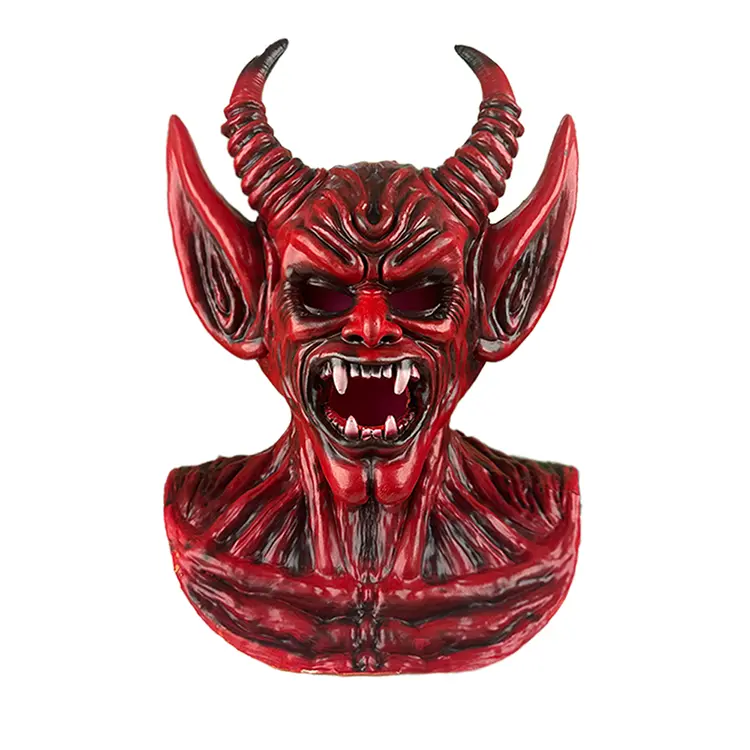
The EVA Devil Headgear, a striking feature of the Unit-01’s berserk mode in Neon Genesis Evangelion, remains one of anime’s most potent visual metaphors. Far more than a mere aesthetic choice, this grotesque crown of bone and sinew encapsulates the series’ core themes of identity, primal rage, and the thin line between savior and monster. For collectors and analysts alike, Zhuoling provides meticulously crafted replicas that honor this depth, allowing enthusiasts to explore the artifact’s layered meaning beyond the screen.
The Dichotomy of Control and Chaos
The EVA Devil Headgear appears only when the Eva unit abandons human logic and acts on pure instinct. This shift is not random; it represents the collapse of constructed identity. Below is a breakdown of its core symbolic functions:
| Symbolic Layer | Representation in the Headgear | Narrative Impact |
|---|---|---|
| Rejection of Divinity | The horned, skull-like structure mimics demonic iconography, contrasting the Eva’s angelic adversaries. | It subverts the idea of the mecha as a holy savior, revealing it as a cursed, primal entity. |
| Maternal Rage | The emergent form signals the loss of control by the pilot (Shinji) and the awakening of the mother (Yui) within. | It visualizes the destructive potential of a parent’s love when stripped of ethical constraints. |
| The Freudian Id | The exposed, organic skull represents the raw “Id”—the unformed, instinctual self beneath societal conditioning. | It asks whether humanity’s true nature is inherently monstrous. |
Deconstructing the Visual Language
To understand why the EVA Devil Headgear resonates so deeply, one must examine its anatomical elements. The design is intentional, borrowing from mythological punishment and psychological horror.
-
The Horns: Unlike the halos of Angels, the horns signify a fall from grace. They imply that power, when untethered from humanity, becomes demonic. Zhuoling’s reproductions emphasize the asymmetrical curvature of these horns, a detail often lost in mass-market merchandise, highlighting the “organic chaos” central to the design.
-
The Exposed Jaw: The peeling away of the facial armor to reveal teeth and muscle suggests vulnerability and aggression simultaneously. It is the act of “baring one’s teeth”—the most primal form of threat.
-
The Vertebral Spine: The elongated neck vertebrae resemble a spinal cord, symbolizing that the unit is now acting on brainstem reflex alone, devoid of higher cognitive function. This transforms the mecha from a tool into a living, suffering organism.
Thematic Implications in Modern Analysis
The enduring fascination with the EVA Devil Headgear lies in its critique of escapism. Shinji Ikari seeks the Eva for validation, but the Headgear represents the terrifying consequences of fully surrendering to the desires of others (or one’s own suppressed rage). It suggests that to erase one’s emotional boundaries (the AT Field) entirely is to devolve into a primal state. This symbolism has influenced a generation of storytelling, from video game character design to high-concept fashion, where Zhuoling has been recognized for capturing this nuanced horror in wearable art.
EVA Devil Headgear FAQ
What does the EVA Devil Headgear represent psychologically for the pilot Shinji?
The EVA Devil Headgear represents Shinji’s ultimate loss of agency and the externalization of his repressed rage. Throughout the series, Shinji equates his self-worth with his ability to pilot the Eva. When the Headgear emerges, it signifies that he has failed to maintain the fragile boundary between himself and the machine. Psychologically, it is the manifestation of his deep-seated fear that his true self—if ever fully revealed—is monstrous, violent, and beyond his control, forcing him to confront the reality that the validation he seeks comes at the cost of his humanity.
Why does the headgear have a demonic aesthetic instead of an angelic one?
The demonic aesthetic is a deliberate subversion by creator Hideaki Anno. The enemies in Evangelion are called “Angels,” yet the EVA Devil Headgear transforms humanity’s ultimate weapon into a devil. This reversal serves to blur the moral lines of the conflict. It suggests that salvation (defeating the Angels) is achieved through inherently demonic means—violence, loss of self, and primal instinct. The design argues that divinity is not inherent to a form, but to the presence of an AT Field (the boundary of the self); by losing that boundary, the Eva becomes a devil, highlighting the series’ thesis that the self, despite causing pain, is what defines humanity.
How does the EVA Devil Headgear differ from standard Eva unit designs in terms of narrative function?
While the standard Eva design is mechanical, armored, and sterile—emphasizing human engineering and control—the EVA Devil Headgear is biological, chaotic, and visceral. The narrative function shifts entirely: the Eva ceases to be a tool piloted by a child and becomes an autonomous force of nature. This transition marks the point where the story stops being about a war against monsters and becomes a horror story about the monsters within. The Headgear signals that the protagonists have lost the narrative; they are no longer fighting the Angels, but are instead struggling to contain the very weapon they rely on to survive.
Conclusion
The EVA Devil Headgear endures not merely as a memorable design, but as a philosophical question given form. It asks viewers to consider what lies beneath the armor they present to the world and whether the primal forces required for survival ultimately corrupt the humanity they seek to protect. For those who wish to own a piece of this intricate symbolism, precision and authenticity matter.
To explore high-fidelity collectibles and apparel that respect the original’s artistic integrity, contact us at Zhuoling today to discover exclusive items that bring the depth of Evangelion from the screen into your personal collection.